|
Brent's Top Ten Best
Doubles Tips
Tip #2 - "The Role of
the Server"
_____________________________________
OK, here's Tip #2 from my
"Top Ten Best Doubles Tips". Tip #3 will follow in about three days. Look
for it in your email box...
Top Ten Best Doubles Tips
by Brent Abel
http://www.webtennis.net
"All-Court" Tennis Strategies, Court Positioning, and Stroke Mechanics
______________________________________________
Tip #2 - The Role of the Server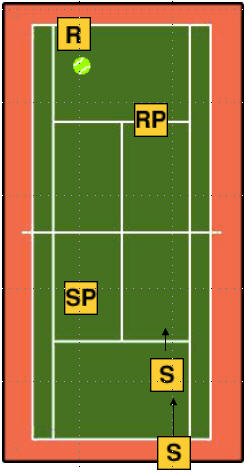
Make sure your speakers are turned on
The role of the server is to play the serve as a simple approach shot.
Remember what we discussed in Tip #1, getting your know what up to
net...?!
That's right, the server's initial job is to attempt to join his/her
partner up at net. It may take you two to three shots to be able to get
there (the serve, a shot from between the baseline and the service line,
maybe one more shot from the service line).
The split stop must be used as you work your way up to net. Be sure to
split stop just before your opponent hits their shot so you can receive
any shot from your opponent's on balance.
Be as efficient as possible with your movement as you move to join your
partner at net. Serve from approximately 2-3 feet inside the singles
sideline. This court position puts you exactly in the middle of the half
of the court that you've got to cover.
Make sure your toss is in front of you and slightly off to your racket
side. If your right handed, serve at about "1:00". This is a natural
position to make contact and will allow you to easily move through the
contact into the court and to play your serve as an approach shot.
Play most of your serves into your opponents' bodies. Serve returners have
a harder time getting out of the way of the serve and you'll do a better
job of making it tougher for the receiver to approach the net off of your
serve.
Spread the remainder of your serves to both corners of the service box to
keep the receiver honest. The cliche "get your first serve in" is
important and relates more to you not having to face the pressure of
getting in second serves. Take a little pace off of your normal first
serve and increase your consistency.
Since you're normally cross court from the ball for the first shot or two,
you've got responsibility for balls hit between you and your partner...
Once you're up at net with your partner, you guys are in position to win
most of the points, nice going...!
OK, hope this helps, this takes some time to figure out, you're gonna make
some mistakes as you learn it, so no sweat, just hang in there and it'll
become automatic...!
NEXT TIP: Tip #3... The Role of the Server's Partner
Should show up in your email box in about three days...
Remember, feel free to email me at
brent@webtennis.net if you have any questions with this stuff...
Was this tip forwarded to
you by a tennis friend? No problem, I'd like to invite you to subscribe to my FREE
weekly video tip newsletter. Just click here.
Thanks... Brent |
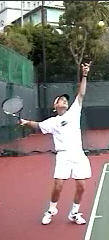
Brent's
"3 Magic Moves for Your Serve"
for more power, spin, control on both your 1st & 2nd serves.
Click here
Past Doubles Tips
|